Wildernesses

על פרקי אבות ביעור טובה

והיה כעץ שתול על פלגי מימ אשר פריו יתן בעתו ועלהו לא יבול וכל אשר יעשה יצליח תהלים א:ג

משלי ג:טו יקרה היא מפניים וכל חפציך לא ישוו בה.

This is how the human being elevates himself.

ותלמוד תורה כנגד כולם the מדרש רבה on במדבר ד:כב 

“The stone the builders rejected became the cornerstone.”  The human has two elements, a theme we find ever present in the ma’aseh Bereshis, creation, from Ha Kadosh Baruch Ho. This is similar to the construct of the מצוות מנורה which has two portions, the אור and the הנכה. Also it is stated literally in the first possuk of our holy Torah that within the Reshis, the primary, Israel (both from Rashi ז’צ’ל’ and the משנה פרקי אבות),  HaShem placed שמים וארץ.

We are inclined towards the material world as it is the predominate environment in עולם הזה (Exile being ra sholet tov). This is explained by the רמחל זצל in his דרך השם, as well as by many other sources, for the state of the world after אדם וחוה were expelled from the גן .   

שירו לה” שיר חדש. And also Torah is called שיר and we recite אין דבר חדש תחת ה שמש

We are pulled between the recognition of our virtual nonexistence and the greatness of the concealed soul HaShem has placed within us. פ”א ב:ט comprises the whole of the matter with respect to the attitude the בן תורה must inculcate if he is to reveal his G-dliness and share in HaShem’s eternity as a yachid.

תלמוד תורה כנגד כולם

I am crafted to be a vessel receiving Your Torah, with Your concealment I am free to act with or against Your instruction. I am girded with weapons as one at war,

תערוך לפני שלחן נגד צוררי,

my table resplendent in white, the gleam of silvers, and the expanse of breath as song. The reflective surface of the wine conceals the depths of Your Torah at the recitation of Kiddush.

I am like You in potential. We are children desiring our Parent’s kind words of approval and encouragement rather than as employees looking for our compensation.**

All that HaShem creates is perfect and good.

All which בן אדם performs that is harmonious with the “רצון ה is too, perfect and good and merits our understanding of what the meaning is for praiseworthy. That is, what does אשרי define?

האיש אשר לא הלך וגו and this human is known to HaShem, and lives, having been giving the choice to act and having followed through. We are created to become אשרי this is the complete manifestation of the potential imbued in our having been formed by the Abishter.

While we may perceive the nuance of אשרי with sensitivity, which demands humility, this is interior knowledge, prophetic knowledge which may not be qualified through division, and in the scheme of our material world, our revealed behaviors may only be informed by טוב, halacha, or רע, entropy.

As I heard from Rebbe, shlit’a, from the Shem M’Shmuel, the extent that we negate the fear of פארה is the extent to which we fear HaShem. When we fear material concerns, they become real, ra being the obstacle of our own will when failing, as Hagar, to see the well of salvation before her own eyes (She was shown the wellspring, it did not appear miraculously) and rather desires its own idea of satisfaction or security. As the mishnah in P.A. states, it is not our task to finish, only to proceed with. Our mesorah is replete with encouragement to be brave and to move forward with Torah and Mitzvohs despite the foreboding obstacles because, if not now, when, and if you say later, there may not be a later, and so forth. Whereas we learn from אברהם אבינו, that he recognized HaShem’s presence everywhere and acted accordingly so that it states, he received all of their, the other nations, rewards combined.*

How does this affect the world practically? When the distorted pray or teach, the idol worshippers, the atheists, for the well being of others, though they mean to do good, though to their bones they are full of love, only greater sorrow approaches, just as one who is unfit to treat the ill will do harm when coming armed with cure alls full of personal faith. That is what it means, too, when Shlomo haMelech states, a crooked thing cannot be made straight (Koheles 1:15).
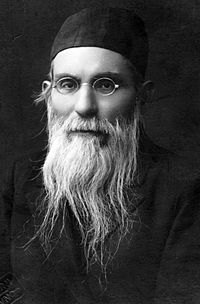
Notes From Shavous

Who may dwell in Your בית?

Cleaving to You as a spouse?

האשר, for whom He toiled six days.

Count the crowns of Your name. But where you find His humility there too you find His greatness, and Avraham, Your generous servant, served Your world for Your sake and revealed this banner on the eighth day of the life of יצחק. He became a singularity himself and placed himself, and us, into Your candelabra*. The eighth light of חנוכה, the lost day secured, concealed beyond the horizon of Your Shabbos. His descendant, the most humble of men, yet with the capacity to strike down and kill a centurion, was trained from adolescence to oppress. Nurtured in the heart of night against Your lit bosom as the stars shimmer against the pitch.

השמימ מספרים כבודו

Your faithful servant, rabbenu, whom You drew from the water revealed the light of the room into which the nation crowds, not a one lacking space* משנה ד:ג 

Drawing from the water, he gives us water, and the land never lacks satisfaction.

Had we prayed for him when his moment was at hand as he prayed for us during ours, who can speculate but the pure of heart for it states in the Gemara ברכות as was taught to me by Rabbi Moshe Schapiro שליט’א, that one may acquire both worlds at once.

The quality of a tree from מעלת התורה

We are crushed by the loss of Your tzaddikim for it states all the gold and treasures do not equal Your Torah. And with the passing of an authentic Jew our amenities do not add up. For we may have this or that acquisition, chase one whim or another – perhaps even be momentarily satisfied. But it will not sear itself into your soul the way we recall the Alter Zaidy’s Torah and mussar or the heliga Bubby’s cholent and her lessons in righteousness.

How rich is Your Torah that all the treasures of the world cannot measure up to Her splendor and radiance? How full Your fields that he, king of Israel, was led by his feet to serve You?

The fruit of Your tree an endless world declaring Your wisdom.

Do not be destroyed with conviction for where you find His humility there too you find His greatness. And who is a strong man? One who controls his yetzer. This is the Rav’s, z’t’l, heroism.

Though there exists an outer shell and the inner place there is only One – do not lose sight, children of Adam! This is the moment HaShem gives us, right now, be happy and rejoice in it.

This moment is the “great war” but you are not a soldier in it, rather we are its master, reveal your kingship before the King of kingdoms, each Jewish family a kingdom.

The radiance of Your knowing dons myriad branches the fragrance of your צדיקים in their eternal and splendid ripeness.

The first in thought the last in deed. All is for you if you will only receive it.

The arrow of Your knowing penetrates the the blanketing dark and a thing is what it is, be it man or woman.

The thicker more numerous the branches the more lush the foliage.

Uniters of disparate entities, masters of the צלם ודמות*

Fruit bearing seed, bearing fruit.

Sublime greatness with utter clarity.

מעלת התורה

Torah Study and Faithfulness ~pages 41-42 (Copied from The Curious Jew, though I have the text in my collection.)

The Torah is called a woman, as it says, “Moshe commanded us Torah, an inheritance for the congregation of Yaakov” (Devarim 33:4). The Gemara tells us, “Don’t read ‘inheritance’ (morashah) but rather ‘betrothed woman’ (me’orasah) (Berachos 57a; Pesachim 49b). The desires of this world are called ‘a strange woman,’ as it says, “The lips of a strange woman drip nectar;” (Mishlei 5:3), “To guard you from a strange woman” (Ibid, 7:5). And it says, “Go not near the door of her home…Make your way far from her” (Mishlei 5:8), “Avoid, do not pass by, turn and pass on;” (Ibid, 4:15), and, “Stay far from falsehood” (Shemos 23:7). Thus, [by being faithful to the Torah]one fulfills many mitzvos.

In connection to this, I heard an explanation from my brother, the Gaon, concerning the Gemara (Sanhedrin 99b), “He who has illicit relations with a woman lacks sense” (Mishlei 6:32); this alludes to the man who studies Torah at irregular intervals. What does one thing have to do with the other? The Gaon explained that since the Torah is called a woman (Yevamos 63b. Just as a wife is beloved to her husband, so the Torah is beloved to those that learn it- Maharsha), therefore, just as an adulterer only approaches his consort now and then, whereas his wife is exclusively his at all times, so one who studies only now and then does not make the Torah his exclusive companion.

Torah as a Tree ~pages 16-17

Thus, the Torah is compared to a tree, as it says, “She is a tree of life for those who cling to her” (Mishlei 3:18). The root of a tree spreads into many branches. Each branch spreads into many stems, and each stem into many fruits. Each fruit has many seeds, each capable of producing an entire tree with roots, branches, stems, leaves, fruits and more seeds to produce another tree, and so on ad infinitum. Also, a branch can be planted to produce a total tree with all its parts, as the philosophers wrote. So it is with words of Torah and mitzvos: every single word and mitzvah contains all the mitzvos and all the words.

The Torah has a further advantage over a tree, for the leaves of trees fall and wither. But it is written in regard to the words of the Torah, “its leaf does not wither” (Tehillim 1:3); and, “its leaf is a remedy” (Yechezkel 47:12). Our sages explained this to mean, “[A remedy] to unbind the mouth” (Menachos 98a. To unbind the mouth is to know how to speak, as will be explained further on.)

The Fruit of Her Hands

The Fruit of Her Hands.

I am from You.

Weatherworn, driven infantryman

the befuddled grunt whom,

first of the watchmen, with wet feet,

stricken,  burdened mostly, and

engaged with conflict

contentious beings;

curled into the soil outside Your cloud’s grace Dan like.

Only You, do the whispers tell of the sweetest everything,

the glory of the heart of Your breast exhales warm rivers into the hours of space;

Into the deltas, fires never quelled, my soul’s cry pours.

What is crafted besides reality?

Some man’s dream, a visage frozen in time?

No! Only One,

You, real sentiment amongst the trembling leaves, the rustle’s Author.

Spent leaves failing before falling, what is more known than today, now, in this moment?

Not the dead spiraling down.

Not the lad’s fancies led unresolved but –

discarding of the peel.

The toil of her hands, mold this one thing.

Reveals fruit.

Generation to generation, waves of worlds blooming

dearly, from sublime moments,

lacking only measurement.

Road worn and narrowing until

only two stones stand, and

Your horizon blankets the matter.

I love You!

But I am among the countless and not too much.

Yet, You, drawer of me, from deepest pools,

from the heart of absolute nothingness.

Depths the monkey descendants cannot fathom for their narcissism like dogs drawn to their own vomit.

Naming, then nursing this lad, set apart

tilled

the sky meets earth and,

kissed against shut eyes, Your modesty impenetrable.

As far as seen You are not exhausted, the depths revealed

moment to moment until

the interior world vanishing, deeper into the bosom’s locket.

Who may seek it?!

Her love is a place to go, an equation to know?

Hagar stood over it and failed.

All points collapse into the wellspring of Your embrace

the sling receding until shot

reaching forever.

Good night somber one, timid love from yesterday.
I hold Your new hand, and I feel in it the earth; missing from her, and gladly lacking, the soft compress of smoothed skin under fear, woven with privilege into stillbirth calm and the kind of betrayals only luxury affords.

Time continues and I am heavy with even greater fears. Please, Du, unlike all the others, do not forget me. Raise us up and let the rejoicing begin again, new, as it always was.

Dan

What is to be said of Dan,

who traveled in galus

throughout, and on the derech hamidbar

and was assailed by Amalek (the righteous hate the wicked, true, but the wicked seek to kill the righteous), and still held firm to His ways?

Rebbe stated nothing less than ushering Israel into the Elul of return like Nahshon ben Amminadab led us into the Yam Suf.

Dan was rebuked and yet still loved his Father, clinging to his G-d despite being outside the Clouds of Glory, the Pillars of Fire.

This is a glimmer of a secret to that level hidden except from Avraham Avinu, Sarah Emaynu, the converts because “On the third day Avraham looked up with his eyes and saw the Place from the distance. (Bereshis 22:4)”

He then states to the travelers whom were with him, excepting Yitzchak (“and then will our mouths be filled with laughter”), “You shall sit here, remain with the donkey, and I and the lad will go off until that point and we will worship, and then come back to you. (Bereshis 22:5)”

There is a fear that cripples and an awe that frees. The holy seforim state the highest level of the heavens is reserved for Avraham, Sarah, and the righteous converts because they did not remain, relieved from the burden of this challenge, and like Dan, clung to His majesty even in that darkest level not reached in Mitzrayim.

There is no poem tonight only this:

I returned home and stood from my chair to stretch when a small movement caught the outside line of my focus. I first thought a rodent was present but on closer inspection I saw a small bird sitting in my hamper, a sparrow to be exact. It was quiet and moved little. I was a little startled but donned gloves and went to gently pick the creature up to free it. I captured it under a cloth and gently gripped it when it sprang  to, fully awake, and began to scream. It had only a moment to fear like that and then it was outside, gone, and quiet again.

It was you I thought of then, sitting and afraid to move, unable and not wanting to see the place in the distance. That does not come from anger. Rather, the possuk says, “(We) will return to you.”

In the end, our redemption will be for the world and those sitting, waiting, will be lifted too, but on the shoulders of others and though the joy will be shared, how can it be likened to Dan!? To Avraham and Sarah!? To the stranger who sits alone at the table not corrupted with cynicism, doubt, fears?

It cannot. Choose your influences wisely.

It Should be Sweet, Please!

V’ha Arev Na 

“Say it louder,” Rabbi Zaidy, z’t’k’l’, encourages, and the young chassidshe boy, though bashful, is not too much that he doesn’t comply and with prompting, shouts, literally, “v’ha arev na!”

Let it be sweet, our Torah, as we state beginning our morning blessings for Torah learning.

In the ambiguity of its form, the limitless expanse borderless, we desire to seek the greatest advancements in Your teaching, its Eternal unraveling, a dish to relish forever.

But it is not a sweetness as derived from honey, from sugar, the sap of a maple tree, wherein little effort is needed to appreciate it, unless you happen to be the beekeeper. Rather as the possuk states, ‘there was evening and there was morning (Bereshis 1:5)’ a transition from the ambiguity of dusk to the clarity of morning.

Our Torah’s sweetness is derived from the effort to obtain it, l’havdil, just as the runner exerts their body to achieve completion of a marathon, or the pitcher who falls to his knees in gratitude after earning the final out for victory.

Our Ch’Z’L’ teach the task is never finished for us (P.A. 2:16), but we must make an effort to contribute to its progress. In this way the analogy to sports is limited since ‘victory’ may not be measured with finality.

We derive our knowing initially from the evening, which according to our Torah arrives first for humanity, followed by night, before reaching the daylight. This is contrary to the nature of the outsiders and against the desired sweetness of the upside down world which is to be pleasurably comfortable. This is how the rectification occurs beginning with Avraham avinu who was given the world to sustain and commanded to destroy as well. 

To begin the day in full light, to keep the Sabbath on the first day of the week, at rest from the demands of chachma which require first humility, then fear; to ignore the Source that fires up the great generators and to consider the clothing as nothingness is to error by speaking before the King without even being asked. To successfully navigate both dynamics, the night (East) and the day (West) require the human, as the Ari’Z’L states, to be m’tzamtzem oneself from madrega to madrega. Success is nothing less than G-dliness and as Rabbi Chaim Zimmerman, z’t’l*, implies, only those who stand in that place may discern it as such and you become like the King in tzelem and demus, invisible to all except the loyal, the devoted, and the returned.

Fearing this effort, avoiding it, speaking out against it, is to desire stillness, chas v’shalom, which is the sweetness of sugar and the like, comfort, the fear of growth and action: a rejection of discernment. Save us from this, please, HaShem!


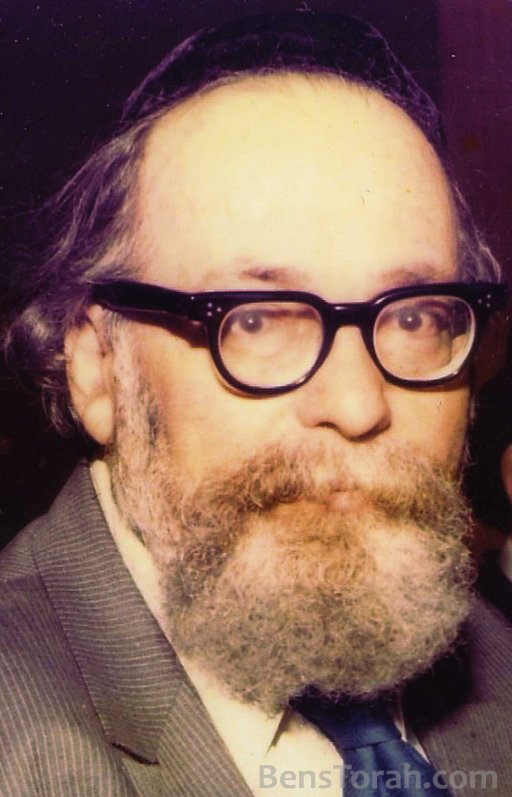
*Rabbi Dr. Chaim Zimmerman was born in  Kanatop, Ukraine in 1915 and studied under a private tutor until his bar mitzvah. He was known as a child prodigy (“illui“) and as a teen-ager attended the Kaminetz Yeshiva headed by his uncle, the renowned Rabbi Baruch Ber Lebowitz, z’t’k’l’. He left Russia at age 15 with his father and immigrated to the U.S.. Subsequently, he taught a Talmud class at Yeshivas Rabeinu Yitzchok Elchanan (YU). He was the last student to receive smicha from Rabbi Moshe Soloveitchik in 1940. His first published work “Binyan Halacha” contains a letter of approbation from the Chief Rabbi of Eretz Israel, Rabbi Yitzchak Halevi Herzog, attesting that the young author was “בקי בכולא בבלי וירושלמי ראשונים ואחרונים”. His most important halachic work was אגן הסהר regarding the halachic international date line published in 1954.  He joined the Hebrew Theological College in 1947 and served as Rosh Yeshiva of Bais HaMidrash L’Torah in Chicago until 1964. Following that, he continued giving shiurim privately in New York City and in Jerusalem. He emigrated to Israel in 1971. He was נפטר on 7 Adar 5755. (Taken from benstorah.com)

Throughout the Hours of the Night.

Bereshis aids us in understanding the holy concept of l’shma, so that we may better comprehend ourselves and our purpose. Rashi asks of the need for this opening in light of the importance of the Law and we learn the fundamental principle of HaShem’s will being the sole authority by din of his Copyright on the creation. We may also see the opening portion of our holy Torah as necessary for the human being to realize their place and context, both in the unlimited majesty of our soul and the bound and diminutive form of this body in the world; to inspire us to love and to realize both in experience and mind and to appreciate the greatness of HaShem and the wonders He performs for us endlessly, all of which serve as goads that they never cease, leading the discerning human on an endless trail of discovery and bounty.

Ultimately we perplex ourselves and this inhibits the trait of l’shma. Our own distractions cause us to feel removed, distant from the good, which is why our holy T’N’Ch reiterates in numerous places that HaShem is always near for if He were removed from a human our existence wold be null and void and, if indeed we had to search for Him and His way, then we might be so lost as to, G-d forbid, not return but this is not the case. The human being is always in the embrace of HaShem but looks elsewhere, finds the mundane enticing because its effect is more immediate and localized, so we need only turn back in one step and achieve a renewed footing.

L’shma is this simple recognition, is this realization of what this bracha to participate in the Creation means.

Simply to realize the whole expression of HaShem’s goodness and suddenly the weight one feels is not of guilt or fear, but of awe inspired by love and gratitude, a responsibility to uphold the tremendous gift we have received for nothing! Ha, it is as though our good fortune fell from the sky!

Understanding this treasure is not too hard when we  invest effort  to consider the  ma’aseh bereshis.

HaShem strengthen us, please, as our distractions are many, our temperaments fickle, these hearts are capricious, and the many choices dilute effort, weaken resolve, and inhibit loyalty.

Small Worlds and Great Gifts.

“One who knows the secret of the human soul, and the structure of the human body is able to understand something of the upper worlds, for the human being is in the image of a small world” (Ibn Ezra comment to Exodus 25:40)

“The rabbis taught: The creation of the world was like the creation of humanity, for everything that God created in the world, God created in the human being. The heavens are the head of humankind, the sun and the moon are the human eyes, the stars are the hair on the human head” (Otzar haMidrashim, Olam Katan 406).

You are a world.

They, the others, are worlds too, no less unique, and as beloved to HaShem as you, no more no less.

Do not strengthen the darkness with your singular judgement (P.A. 2:4) rather love Hashem for what has been revealed to you and reach for the expanse, merit the blessing of your fathers.

The great war began with Adam’s dissent and is continued to this day. This is the conflict kadmon, the “great war.”

Navigate the Midbar and run clear of the ways of Plishtim. The greater world is the nation, the smaller worlds are the individuals, among whom we are counted.

The best ‘suffering’ for atonement is through study.

Please, HaShem, may all of Israel be zoyche through trials from learning and nothing else.

Koheles states ‘Hashem made Adam simple but they seek out many intrigues.’

The most profound concepts must also be the most

simple as we are taught, “ein od.” There is nothing more than You.

But our simplicity requires sensitivity and discernment and does not encourage being a simpleton.

This idea is verified in the Chumash section dealing with Hagar and the wellspring for, as our Ch’Z’L’ state, the well was always present, it was not provided for her miraculously, but she did not see it.

Ober Lernen Toyre iz de Beste Zach

א

מדרש רבה בראשית

ר הושעיה רבה פתח משלי ח:ל ואהיה אצלו אמון ואהיה שעשעים יום יום משחקת לפניו בכל עת

Who could complete the telling of Your deeds?

Curled into the soil outside Your cloud’s grace, I make a request.

Only one.

Only You, do the whispers tell of the sweetest everything into which my heart pours.

The Glory of the Heart of Your Breast exhales warm rivers of life into the hours of space.

Polish the surface

set the lense.

Rivulet light as dew on valley greens.

I, fruit of Your knowledge, amidst Your knowing, hunger with voracity.

Please do not let me go,

not to sing songs of loneliness, indirectly, over Your memory.

Aye, Rabbenu shel Olam,

Du.

Your clouds, ephemeral borders, refract light so that  the human may now search out Your presence

What is revealed ever changes and what is concealed never, yet Adam increases their domain, מלכות.

I was hidden in Your will as a seed in the soil and You brought me up to the חופה

From a sprout whose want is for freedom to the young shoot, whose strength seduces with taut skin and robustness, charming the moment. But You HaShem, raise the soul up into being, and our worlds hang on nothing* (also תהלים צ   Yiov 26:7)

The lapping of waves at sandy borders or the earth’s curve trailing the horizon, separate without static division between the revealed and the concealed. The worlds teem below the water’s skin and I may search Your letters to the heart’s unending satisfaction.

From the elders, whose branches connect the generations to the trunk increasing in strength and glory until the roots which reach out and hold “as a tree securely rooted at the edge of stream” whose water’s depth proceed beyond the veil.

We have been born from beyond the horizon’s curve.

Your breath fills me, Your soul powers the machinery.

Her, Israel’s, the yachid’s, light increasing the luminescence through mastery of the Torah and the nurturing of שלום until she blossoms in the זקן in his hoariness* as though accompanied by Host as the face with beard and payos.

“How can I get old?” “You just do.” Or The Suicide Chair.

Lanky Jimmy Tanner swung a bag of good times over his weaker shoulder. The party store neons flickered polychrome in the curved lenses, reflecting below copper irises, while he tried to stay his hand at following through on an idea.

He pushed the tortoise shell frames up on his nose, glided out of a thinking revelry, into a quick shot of gut sadness suddenly not sure where he was, or was going; how could he have forgot? Pausing with a sigh, Jimmy pulled the Black and Mild from the inner pocket of his jacket.

He sparked the cigarillo with a series of long, deep drags, exhaling a thick rope of smoke, the hazy tendrils lit up into swirls and streams under lamp light beams.

The visceral atmosphere, like the fifth planet’s skin, influenced under Jimmy’s breath’s touch. A solitaire street light shining becomes a singular star beaming through viscous marble sheets of exhalation, exposing an infinitesimal  fractal of this world held together in waves. The delicate motions lapping shore lines of rolling dust, mass pressed into form, ‘through torque,’ Jimmy processed previously, ‘cinematically, delivering Divine intent.’

Standing curbside, absorbed by the space around him, he suddenly noted, and heard, like drawing the self from sleep paralysis, a faint murmur, growing nearer in volume, suddenly rising up into a chorus of voices, calling his name, “Jimmy!”

The sun’s light further rolled west, back arched into dusk’s love, and against this blustery grain, the lone figure of Jimmy Tanner, pulled his tall frame out of the cold, into the car’s cramped rear quarter, warmed from bodies and engine.

He boarded the vehicle, dusted with snow and caked on elements, where his friends, Mamie, Abby, and Calvin, waited in the heated ’86 Metallic blue Chevette, the Blue Tortoise. The Chevy was nearly mint for it’s age, except for three spots of rust. Each a corrosion, true, but these were placed, with accidental intricacy, just under the driver’s side view mirror. They pressed out like accessories placed with nuanced grace on a lady’s blouse; medals pricked into the fabric of a uniform.

Small marks, three tiny blooms, drawing the eyes away from your baldness; they did not present as an affliction, rather, the spots became familiar. Like the neighbor’s girl, on whom you secretly crush, though the world sees her plain, and upon her neck, the details you’ve memorized, lay three moles. More than flaws, these mutations becomingly adorn her, against the grain of her predominant plainness, anchoring the thoughts of her to your memory all those years later.

Jimmy looked sternly, his features drawn in, as one who’s news is bittersweet, and he pushed out for space in the tight confines.

The two girls in front enjoyed Jimmy’s dreamy, space cadet qualities for the opportunity to harass and tease, and flirt, prodding him for mischief or small talk, in a cloudy hazing. 

Mamie depressed the clutch with her left foot and led the gear shift into reverse before backing out of the space. Abby prattled on about the seafood dinner she had with her father the previous week. After the meal, as father and daughter were walking toward his car, she threw up the contents of her stomach after snorting two lines of good heroin in the restaurant bathroom for her private dessert. Everything, she told the group, looked like it just came off the plate, except now, it steamed, a circular mound of barely digested fare, resting on the parking lot’s black asphalt surface.

Jimmy listened to Abby, the words becoming a preamble to his thoughts, as he leaned against Cal, snug against his friend, warm and glazed over from the blunt, letting go and quickly swooning in love for her. He was beguiled at her presence; she came on like the breaching Kraken, punching the space with her pale blues and the clinging tentacled wrap of her blooming halter top just under the weight of her winter coat. 

Sitting in the front passenger seat next to Mamie who always drove without talking, wrapped in her grandmother’s red fox, her sandy blond hair teased. She had lacquered onto the lidded upper hollows of her skull, heavy blue eye shadow, painted against the pale sea blue of her irises, and Jimmy, since their meeting, felt an adolescent’s love for her, a fact his actions left little doubt of.

She existed like a postcard, smiling with beverage in hand, telling you outwardly she didn’t care, but her eyes sat pleading from the interior for rescue, to keep her in mind, that she’d be worth it. And he was receptive to this, imagining anything possible; she, and him, driving, no evil remnant to impede them.

Not for Abby was receptivity, she was fire, angry fires, eating all the fuel the land offered.  She was both muse and gorgon.

Jimmy suddenly laughed loudly, all the daydreams resolving sensibly, and abruptly, as though only he knew the joke, ignoring everyone in his revelry, except the one person his focus framed, Abby.

But Abby loved Tommy, in that unique way that leaves everyone running for cover. She brought him to the needle, led him to an enclave seldom exited. Jimmy met her the same night, but drunk towards slurring, did not remember, and considered their initial meeting a week later. Probably, this changed little, since only Tommy afforded Abby that particular luster of being in an absolute limelight, continuing newness that hardly rested.

Tommy never turned off, and Abby, though warm and intelligent, was hungry for that kind of stimulation.  Jimmy quietly sulked. He wanted her furnaces pushing for himself. But he desired sleep too, and he didn’t have money to be messing around with heroin.

None of this was viable really, though he saw, only kind of, and then in a marginal way, where the two lovebirds were heading. He did not think it was sustainable, her push for gratification, Tommy never veering from his path of total commitment to accidental lunacy, their lives only salvageable through remotely available successes. Jimmy wanted to flirt with impulse, he was symptomatic too, of delusional inebriation, and he wanted her to get him high. But he feared other things, besides her rejection. He feared the absence caused from death.

Jimmy was more enamored with Tommy than anyone else besides Abby, since, more than superficially, their relationship, writing songs together, meant they shared with each other feelings on subjects, experiences, in a manner each might otherwise hide from the public. Jimmy, with the reservation of that greatest generation, felt an old fashioned loyalty to Tommy, he once called it ‘Frank Sinatra cool,’ referencing a time when privacy counted for much.

Jimmy had seen people close to him collapse suddenly into nothingness. Witnessing the evisceration of their humanity and he had fears. Fears, that did not lay at rest except in the day’s routine, in the machinations of  a power sander, or the rhythm of a chef’s knife against the board, his guitar, and when the shadows reared up, showing him the end, Jimmy shrugged it off, only wanting to be involved with something visceral. But during the quiet moments, alone with his reality, he knew Tommy was a thread’s break away from oblivion.  This knowing compounded Jimmy’s desire to brave her storm, free Tommy, and arrive, shouldering the confidence of a thousand victors.

“I’ve just figured out one of your secrets, Abby Gold!” Jimmy said, losing his breath from excitement and the hysteria of his trying to get out of a small space.

“What does that mean?!” She was immediately defensive, dropped  her tempo, and everybody picked up on it. Nobody knew what, or whom, he was laughing at and Abby felt like a stranger picked from the crowd, embarrassed at the exposure, and crouched to defend herself against unknown intentions. Palpable demonstrations of attitude, ready to conflict, thickened everyone in the car, except Jimmy, whose lack of tact generally begat these confrontations while any of the other three, could suddenly be a stranger, and violent.