My Master and My Teacher.

In the first chapter of Tehillim we learn that HaShem knows the way of the righteous and the ways of the wicked are lost.  This tells of the finality of all things and relates to a deeper inyan my teachers have called the kolelles. That which adheres to Torah in this world, both in matters regarding the duty of the heart and in the matters of the limbs’, and our obligations to fulfill these directives such as demands us by way of mussar, the love in chassidus, song as teshuva, good deeds, fulfilling mitzvot, the best zach, learning Torah, developing your awe, whatever draws your person nearer to HaShem, our Creator, these actions, expressing kedusha, are “known” by HaShem, they are everlasting as His knowledge is everlasting. 

HaShem, the benefactor of all, kol, our good. Righteous person, aligned with the infinite and cleaving to HaShem your G-d today, you are alive and the praise of HaShem is eternal.

As Ben Bag Bag says, “Everything is in it, turn it over and over and over again.”  And as we state in the Aleinu, at the end of the first paragraph from Devorim 4:39, for Ain Od, there is nothing else.

This tells us of the inextricable nature of our reality from HaShem’s will. As a part of this tapestry, our being b’tzelem E-lokim elevates us to the heights we may pursue our divine objective (*explain this out with the Pi analogy) which is to be known by HaShem or to manifest our relationship with G-d in an eternal way, to be a part of His knowing.  If, G-d forbid, one desired to cleave to the tapestry itself becoming part of it and after sharing its fate, their actions will be as they are, primarily as formless dust when relinquished of their soul. G-d help us!

Following page 36 from the Feldheim Chovos Halevovos and the author’s central theme here, we can see where the theoretical causes division.  Controversy regarding the offerings as they appear to our minds, details which separate one Jew from another, matters of kashrus, dress, ideology, etc., these are distractions. We are taught that all resides in our daled amos; we have a small sphere of actual influence, but from this arrives worlds. It is the faith of our holy parents, Avraham v’Sarah, that they were “naaseh,” fulfilling the imperative of our Pesach song dayyenu. They completed there tasks for their own sake, their Torah forever concealed in humility. They never acted on the “nishmah,” they are forever the Torah’s embodiment of l’shmah. Many points of contention we have with others are not caused by those others but rather by our own insensitivity to the emes

The Significance of the Akeida and The Upside Down World

And Avraham lifted up his eyes and he saw the place from afar.  It follows from a previous lesson with Rebbe Reichman, shlit’a, that this concept of seeing the place from afar refers to the quality of Avraham Avinu being in a state of continual mishmeres.  Avraham Avinu saw the matter early from afar, so that every step was made reflecting HaShem’s wisdom back, returning HaShem’s great love and acting as a tamim

Ch’Z’L’ teach us that the place he saw from afar is today the Temple Mount.  This is one meaning of the quality of Emes, that it is only prosperous through itself. It remains new and yet has always been, indirectly revealing itself through patterns, described by our holy possukim. Our Ch’Z’L’ and those pious individuals after them, who modeled themselves after Avraham Avinu, can only be true and reflect greatness in their being when connected to HaShem prior to the manifestation of their actions. It is their intent, the internal factor that is primary, that defines their actions. Into this primary factor did HaShem place the heavens and the earth. This is the clear world that is called upside world, tov sholet ra.

By the other, this world, the opposite is true. Actions define their intentions. As R”M”K of F.L. stated, “First an automobile was inventing, increasing the power the driver has, beyond the horse and buggy. After many traffic accidents at intersections, stop signs were mandated. After many accidents seat belts were mandated.”

Toiling in Torah is to “see the place from afar” is to be mishmaret, that is to consider via one’s Daas Torah before acting and to remain, G-d help us, steadfast against whatever tides of influence we experience outside of these holy currents. We are not reacting to stimuli, we’re guarding against said stimuli, preemptively.  This is also why Shlomo HaMelech says “who is a wise person? One with eyes on top of his head,” who considers the long term ramifications of his actions through Daas Torah, and this is only available through humility. 

This quality of seeing the place from afar aides in our transitioning and transcending from the status of being an evid m’yirah into an avid m’havah, or as we say in the Rosh Hashanah service,  that we come before HaShem q’vanim or q’avodim. This state of being “mashmeras” gives us the blessing of q’vanim, like children, as we are called the children of HaShem.

This is like the owner of a company.  For his employee who is not related to him and solely works for the sake of a paycheck, any shortcoming on this employees behalf can result in the termination of his position. The employee strictly wants to fulfill the role of his job, when he shows regard, and does not consider beyond that obligation. The owner’s child however, may not only make mistakes and error without fear of losing his status but will even be encouraged by his/her parent to improve. As the child of the owner, the capacity to be mishmares means that the child will consider above and beyond the duties of whatever job they’re in in order to best see the family company improve and will desire the a parents approval for said effort that needed know prompting but the relationship between parent and child. 

This is Avraham Avinu relating to HaShem when he sees the place from afar.  His sole duty is like a child to a parent.  Avraham Avinu saw this place from afar, i.e. he was aware of this point and space where at a later time he would bring Yitzchak as an offering. Avraham would see too, that his grandson through Yitzchak, Yaakov Avinu would later rest his head at this place on a stone.  Avraham intuited from HaShem that he would have a descendent through Yitzchak who would later rest his head on a stone at this very spot, the very spot he would bring Yitzchak to be a sacrifice to HaShem. He did not see the way, only the objectives and acted with full trust in HaShem. This is a whisper of the “great love” that offers to its wearer, tamim

Yer Blues.

The blues ain’t

youth dry humping on sofas

digging

the earth’s herbs

plow can kicking steam.

It’s no color, but

knee ache

cold sky

needa, gotta dollar for beer?

Blue.

Let there be no deep pool tonight,

no black sky mirror;

no rushing spring

angry foam shoreline

or heated exchange, instead

recall that you saw me from that costly window,

my voice lost to your ear.

Stat.

Agnosticism, represented by loud voices, crushed whatever chance of bloom we may have had.

At some point Joseph rose from sleep, his head throbbing with hangover. It was early, 4:36 am. He wanted to watch the sun rise but he could not remain awake for another hour. Besides, he reckoned the city’s grip held illumination tight. The sun, when up, hung over steel phalluses wrapped in chrome fashions – the sky mostly soupy. Five minutes of the outdoors necessitated another shower.

The most near star finally pushed itself into Joseph’s room; it was thick and shameless in the affection, waking him. In the room, sunlit sky blue and cracking, Joseph came to without the thick residue of sleep, awaking naturally, appreciating the large window’s generosity. He lit the pipe that lay beside him near his head just below the mattress resting on the floor. Sitting up against the wall, its plaster chipping, the charming effect of the tobacco’s inhalation worked instantly.

Today Joseph visits his neighbor, who lay sick on his couch. His face maimed in an accident, he drank grain alcohol until blacking out. For beer he would talk if you could find him. Nevus, his name, had the reputation of being nearly authentic, albeit broken. Joseph saw no reason to think otherwise.

The two became friends of circumstance, living near each other, sharing cynicism. Another acquaintance who never had money. Cash, at least the accumulation of it, was rare and fleeting. Enough for cigarettes, or enough for fast food, any amount, which could have been spent better, instead our drinking, alternate forms of participation. Rent.

Satiation draws you nearer to romance, which offers affectation. Having no money requires stamina – no romantic high ground, no insulation. Your work suffers and dies.

See the varying classes of our species and how they deflect their stations. The poor, dressing outlandishly, the marginally wealthy hungry for justice and change – they just aren’t rich enough. Economic classes superficially but at heart lie distinctions between varying qualities of exposure. Joseph swam the meridian, witnessing death, suicide, anguish, and beaten hearts lacking money exposed, more readily apparent, really, than past the thick walls of affluence. Money affords the privatization of suffering, the regard birthing stability of depression.

Bureaucracy humiliates the vulnerable. Without money your sores are exposed, picked at by the selfish myriads of do gooders hungry for authority, you become more communal, statistic-like. The dead eyes of those wanting to aid you waiting for reward and recognition. And as Nevus often says, “Who doesn’t have a fear of stats?”

What Can I Say? Are you a failed person of privilege? A failed artist? Both even, with strong political opinions?

This week was war themed. Kippur, Passchendaele, Spinal Tap (revisited, and it was funnier than recalled, but it too is war, though more internalized, both obvious and subtle portraying many layers, alluring for the seekers; therefore does Nigel state, ‘none, none more black.’


Maybe, if we come around again, they’ll explain why films manage love stories while portraying industrial destruction. 

We’ve just watched Kippur.

Did the director’s character really say ‘you should read, Marcuse’s: One Dimensional Man?

He did.

What of Festinger, his cognitive dissonance. Those relics of heady college years when we knew so much in our reckless confidence, and tore lives apart like a dark star feasting on binary satellites. How many times did we crack bindings, hungry for epiphany and never letting down the oppressed, opined heartily! How well we hid the lack of trying, the lack of trial and testing, the dearth of discoveries, under bigoted rage.

We stabilized with Levinas while Derridas tapped out morse code rap, entertaining enough and we were happily thinking that we thought; a lot too, about important matters. Everyone a shy recluse never implying what had seemed obvious. Kierkegaard, you’re so handsome, I just want to talk more about your trembling and pet rodent, please, come with me, I can hear you better in my bedroom, away from these other people. Later E.B. White satisfied. Right, right! We had been there together, you in socks, and invented scoffing. Didn’t she say you could draw pearls from any oyster?

Arrives Eric Hoffer.

True Believers.

The fear bit, especially of misfit-ness surely, but who knows? You could be me tomorrow.

Maybe freedom and power aren’t totally opposites, maybe they do belong in the same conversation. If you’ve had either…

Politics makes power productive.

Neither has anything to do with freedom, but in the context of a love story even war enraptures. Is this what is meant by ‘not to trust oneself until the day of death?’

– Pirke Avos 2:5: Hillel says: Do not separate yourself from the congregation. Do not believe in yourself until the day of your death. Do not judge your fellow until you come to his place. Do not say something that cannot be heard, for in the end it will be heard. Do not say, “When I will be available I will study [Torah],” lest you never become available.

I am looking for you. Answer me, please. Count me among the worthy. Or: “Also it is not good for a righteous person to mete out punishment” ((Mishlei 17:26)

Time is fluid and measurements transient. We see this with Bilaam who knew the time of kindled anger:

           AGADAH: PRAYING FOR THE DEMISE OF THE WICKED

  • QUESTION: The Gemara teaches that there is a moment during each day when Hashem’s anger, as it were, is aroused against the world. One who knows this time can cause destruction by saying certain things at that moment. (See Insights to Berachos 7:1.) The Gemara relates that Rebbi Yehoshua ben Levi had a wicked neighbor who was a heretic. Rebbi Yehoshua ben Levi decided to utilize the moment of Hashem’s wrath to speak words of destruction about the heretic. He waited for the proper time to arrive, but before it came he fell asleep. When he woke up later, he said, “I see from here that it is not proper to arrange the death of a person in this manner.” He cited supported for this from the verse, “Gam Anosh la’Tzadik Lo Tov,” which he interpreted as, “Also it is not good for a righteous person to mete out punishment” ((Mishlei 17:26) http://dafyomi.co.il/sanhedrin/insites/sn-dt-105.htm).

A point in time occupying no space beholden to an earthly clock, instead, this resplendent bechor, (Tehillim, 118:24) “זֶה-הַיּוֹם עָשָׂה יְהוָה; נָגִילָה וְנִשְׂמְחָה בוֹ,” the Abishter’s yom, the first moment of our day.

Our noted place for modeh ani:

  • And he said: let me go, for the day breaks (xxxii, 27). It is written, They are new every morning; great is Thy faithfulness (Eicha, 3:23).

           R. Simeon b. Abba interpreted this: Because You renew us every morning, we know that great            is Your  faithfulness to redeem us.

          R. Alexandri interpreted it: From the fact that You renew us every morning, we know that                   great is Your  faithfulness to resurrect the dead. (Bereish Rabah, 78:1)

This “great faith,” offered to the sleeping beast while the crown of (reishis) chachma is obscured from perception because of sleep, hence “arise like a lion to serve your Creator in the morning” (Shulchan Aruch 1:1).

The space dances in light as the electron cloud and resides in daled amos, the gap in the ה (distinguishing it from “ches”). This narrow place being our cleft in the rock (וְהָיָה (בַּעֲבֹר כְּבֹדִי וְשַׂמְתִּיךָ בְּנִקְרַת הַצּוּר וְשַׂכֹּתִי כַפִּי עָלֶיךָ עַד עָבְרִי, the portion of our influence, erev, the beginning of the day, turbid with mixtures. Here and now, Malchus, our shared daled amos.

As I heard from Rabi v’Mori, shlit’a,  “all is blessing pouring out from on High, except our teshuva, this is desired by G-d, and ours to give.”

Where rests Your anger?

Dark sonatas igniting

lava-like pools

drawn in a breath,

enmeshing,

swirled into the mix with cosmic fidelity;

let’s not ruin efforts with dreams.

For Our Loves

Returning our focus to HaShem is as much an act of teshuva as is following the R’M’B’M’s given prescription (Hilchos teshuva), though their contexts can appear outwardly different.

Think of the times you have spent on a date, or out with your fiancee, maybe your spouse, and you are engaged with your cell phone. When you realize your action’s potential implication and cease the the activity (assuming they have not already rebuked you or broken off from you) and return your attention, your focus, to this significant other, that, today, is a great cause for celebration! Imagine how they must feel, the warmth and intimacy shared, when you’ve set aside your distractions for them.

There is an idea that everything we experience here is a kind of mirror image or echo from G-d’s Torah on high and that would include all the various types of relationships and feelings we experience in this world ranging from the love of spouses, the love of immediate family, extended family, neighbors, friends, etc.. Those relationships are a diverse array, revealing to us practically, facets of how HaShem relates to us and how we may relate to G-d. In truth, G-d’s great love for us extends far beyond human relationships including all of the good we receive from the effects of gravity to the limiting of sensory responses within narrow portions of any given spectrum, enabling us to discern.

The generally accepted path to this heightened receptivity, is through first mastering all of the Torah, l’shma, and doing so in a manner that effects your person, necessarily through yirah shemayim (Proverbs 9:10), and, to achieve that, humility (Proverbs 22:4).

Honest observations will show us there are always unknown x factors because we are dealing with an infinite palate of possibilities so the manner in which our Torah and our sages instructions can be employed will always vary and be unique, hence lacking humility, real discernment and expression is impossible.

It is a slim area on the spectrum to be honed in on in order to avoid being distracted from realizing that G-d’s love is REAL, no less than that we share for our loved ones and that the Abishter’s presence isn’t concealed necessarily, it is just too profound and intimate to be conceived of outside the directions given us in our holy texts. None the less, with diligent consideration and follow through, G-d’s love is vital, ever present, and yes, we can relate to HaShem’s presence as readily and with as much fervor as we do our human counterparts. Our inability or reluctance to do so is more suggestive of a lack of proper instruction and preparation than simply considering faith as an intellectual enquiry. However, since opinions do not require physical exertion, we might confuse our lack of effort in understanding deep matters as legitimate questions on hard to grapple with topics. 

The mitzvah to love G-d may first goad us toward this deeper understanding, since it begins with a command to pursue a relationship which may not have been developed, and then gird our resolve to retain and strengthen it as we progress and see more clearly what our roles can be in this wondrous space.

That is really no different than developing and maintaining a love for another individual. That love can waiver for a variety of reasons, but when it is valued in the proper context, and focused with substance, the mature and consistent effort required to strengthen in its shared resolve, can keep focused, the heart’s wants, on the given goals the deeper portions of our minds and souls desire for eternity.

That Remote Sadness In Her Eyes.

A remote sadness squatted on the glimmer of Margaret Sue’s eyes, and Bryan sat pining for her. The allure of M.S.’s awkward confidence, her shying away with insecurity despite privilege,  afraid, but with a bold grasp, as though a cat’s paw toying with mice and she would back away, fearing real independence, when suddenly facing decisions. He was not invisible to her and this counted for much but her needs required something he could not give her, a reason to stay behind. 

There is a fire born in the seams of a pillow;

a luminous sentiment,

breaking through the stiff fabric of routine,

emerging out of disciplined seas;

defining form in shadows,

living

breaths plied,

as effort, becoming work,

the occupation of industry’s muse

bound by no wall and

the verdict of (your) gorgeous thoughts,

runs free

as water

over lands’ new stretch.

Elul and the realm that is without limit, the light that never ends.

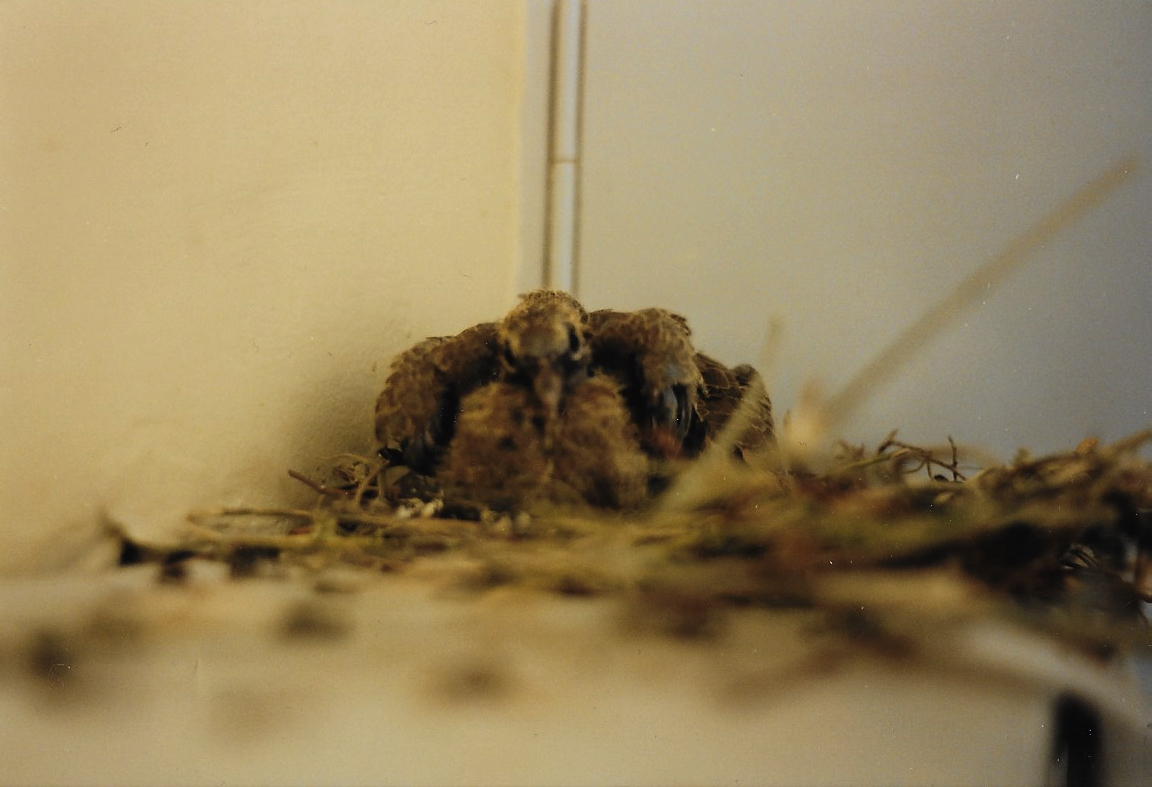
Against this dimming sky, in the season which has bared the wood of its foliage, the observer, vessel of senses and G-dliness, perceives the black ink silhouette of the tree’s sinewy form with its myriads of limbs expanding outward into the lit space as a two dimensional apparition. Within the crevices of the branches he notes an anomaly, the nest of a bird. This habitat would be concealed on a summer day in full bloom but today it appears as an alien structure outside the natural rhythm of the tree’s growth and naked so as to be a tool for understanding. He imagines from the bird’s perch a world limited to needs, the drive of the animal spirit to live, the instincts for security, sustenance, and continuity.

The humanoid observer knows more than the superficial knowledge his eyes beget. If she walks nearer the tree he experiences its three dimensionality and greater detail than the impression of black shadow and light. She observes the tree’s bark and the nuance of character the fiber demonstrates. From every available angle she sees the light is not nearly a backdrop but a blanket effusively present. The narrower, more frail branches of the tree run a course converging into sturdier, heavier limbs. These heavier limbs converge into a singular trunk. Beneath the tree’s skin (bark) exists channels cut into the fleshy pulp which draw water against gravity to the higher realms. The vitality of the tree’s perimeter rests in the dense wood fiber of previous generations. The weight of the trunk drives downward into the organic dust, the soil of generations, into further concealment where with diligence the observer notes the trunk diverges into a secondary myriad array of tentacles pushing into the depths to draw water for the tree’s revealed portion. The observer could go on and on into discovery, into the generations of seeds which came before and brought this tree into being, into the cellular matter and the divisions of solids, liquids, gases, into the sub-universe of atomic matter, towards the quantum properties, as the holy Chazon Eash, z’t’k’l states, (Faith and Trust perek 1) she can observe the depth of the earth and the expanse of the sky.

The nest is derived organically from twigs; the lighter entities of the tree itself, the heavier branches spread out, under the bird’s structure, hardly practical for the nest but necessary to support its weight, secure in branches, forming a shelter. The birds derive sustenance and maintain existence in the small envelope of their world. The nest houses the creature’s brood. The vessel, the animal entity, is propelled with the needs for food shelter, and continuity. Though each creature is endowed with uniqueness so that an in intelligent being may perceive even individual personality in the animal kingdom, they fail to achieve, to any observer with discernment, the refinement possible within the human’s statement into the world.

The expressions of personality amongst the animal kingdom have negligible meaning compared to the humanoid and our portion/reflection of G-dliness (reason and imagination). These creatures flitter about, compelled to live temporarily, though He considers and endows their every movement, every instinct with vitality and prepares in advance of their needs “You give them their food at its proper time.”

The bird’s orbit includes the tree it is nestled in, the fruits, insects, the nectar of the field, the dry branches, twigs removed, etc, but it does not perceive the wholeness of the world in which it dwells, the completeness of the fabric of the worlds of which it is a part. This is the manner of existence for the outsiders of the Torah, lacking the internal quality of the merit of the fore-parents (Rabbi Chaim Zimmerman, z’t’k’l, states a person can know everything! Granting, of course, that everything never ends so they are both eternally knowledgeable and eternally desiring knowledge and they will be sated, for the verse states “He opens His hands and He satisfies all the desires of the living,” and “Eat with joy for He has already drawn your desire near.”).

The observer notes the bird’s realm is unfathomably deep and how even the most remote tip of the furthest root concealed from the eye works in concert as a whole for the bird’s sake, for our sake. The matter of creation extends, beyond our knowing, into the realm of that without limit, the light which never ends.

And who is able to measure the whole extent of the Abishter’s wisdom to recognize the tapestry to which humanity is embroidered? Except by the merit of the fore-parents, born of earth and forged in humility, who acted with trust and faith in the dark of the night, the epoch of nothingness, darker than the host in Mitzrayim? As the remnant outside the Clouds of Glory, Dan, who heralded the redemption as does the month of Elul. The charter which existed in the midbar with serpents and scorpions and emerged from a pit in which there was no water! Just as Yosef HaTzaddik tasted the harshness of exile and he is likened to the Avos. As his father and great grandfather, Yosef is removed from his family, like Avraham from his family and the children of Israel from the family of mankind. Sent into the heart of the sea which constricts (M’ tzar’ yam) until none return except by the blessing of  redemption the Abishter places on Israel. Only Israel comes out of Mitzrayim! Only Torah may see from one end of the world to the other!

This is among the merits of reciting, amen y’hay shmay raba, which saves us with nourishment for the seed and the worlds in which we lay buried. Defines and girds our separation from the material world and its temporality for we praise HaShem eternally and infinitely, beyond the scope of our knowing, with humility, that His wisdom, His blessing, His expression of life rests upon and invigorates every element revealed and concealed of the creation for our sake. That we may serve Him with the study and teaching of Torah, with the performance of Mitzvos and acts of goodness despite the impenetrable concealment of His presence and the night’s darkness despite lacking the ability to know empirically the length, breadth, depth and width of His regard. We recognize the advance of our fortune from His great love, ahava raba, and strive for existence beyond the fanciful flights of our fractional being. This is the redemption of the world, the union of soul and flesh, the peace made between light and dark where the Abishter sanctifies the Shabbos for all times and the soul elevates the body for all time, the cleft in the rock, and the place of Moshe’s burial. Wherein all things express both their image, tzelem, and their likeness, d’mus, and the eternal nature of our being, as His being, is known and revealed with unending gladness and union.