V’ha Arev Na
“Say it louder,” Rabbi Zaidy, z’t’k’l’, encourages, and the young chassidshe boy, though bashful, is not too much that he doesn’t comply and with prompting, shouts, literally, “v’ha arev na!”
Let it be sweet, our Torah, as we state beginning our morning blessings for Torah learning.
In the ambiguity of its form, the limitless expanse borderless, we desire to seek the greatest advancements in Your teaching, its Eternal unraveling, a dish to relish forever.
But it is not a sweetness as derived from honey, from sugar, the sap of a maple tree, wherein little effort is needed to appreciate it, unless you happen to be the beekeeper. Rather as the possuk states, ‘there was evening and there was morning (Bereshis 1:5)’ a transition from the ambiguity of dusk to the clarity of morning.
Our Torah’s sweetness is derived from the effort to obtain it, l’havdil, just as the runner exerts their body to achieve completion of a marathon, or the pitcher who falls to his knees in gratitude after earning the final out for victory.
Our Ch’Z’L’ teach the task is never finished for us (P.A. 2:16), but we must make an effort to contribute to its progress. In this way the analogy to sports is limited since ‘victory’ may not be measured with finality.
We derive our knowing initially from the evening, which according to our Torah arrives first for humanity, followed by night, before reaching the daylight. This is contrary to the nature of the outsiders and against the desired sweetness of the upside down world which is to be pleasurably comfortable. This is how the rectification occurs beginning with Avraham avinu who was given the world to sustain and commanded to destroy as well.
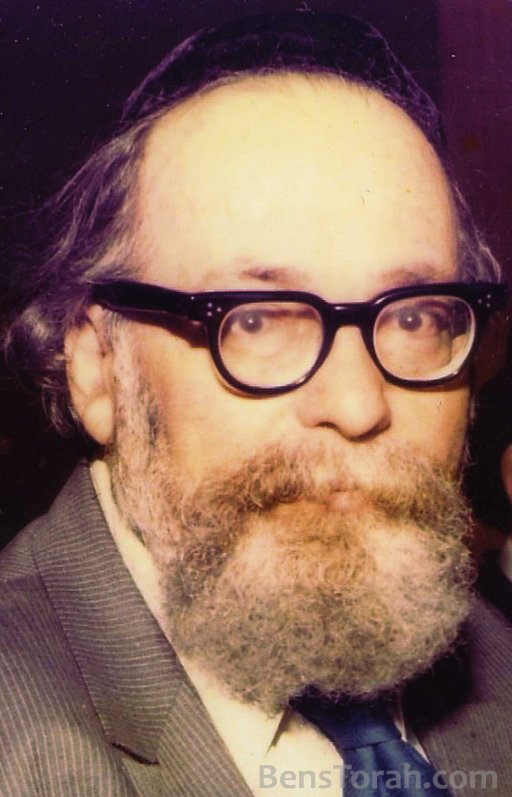
To begin the day in full light, to keep the Sabbath on the first day of the week, at rest from the demands of chachma which require first humility, then fear; to ignore the Source that fires up the great generators and to consider the clothing as nothingness is to error by speaking before the King without even being asked. To successfully navigate both dynamics, the night (East) and the day (West) require the human, as the Ari’Z’L states, to be m’tzamtzem oneself from madrega to madrega. Success is nothing less than G-dliness and as Rabbi Chaim Zimmerman, z’t’l*, implies, only those who stand in that place may discern it as such and you become like the King in tzelem and demus, invisible to all except the loyal, the devoted, and the returned.
Fearing this effort, avoiding it, speaking out against it, is to desire stillness, chas v’shalom, which is the sweetness of sugar and the like, comfort, the fear of growth and action: a rejection of discernment. Save us from this, please, HaShem!
*Rabbi Dr. Chaim Zimmerman was born in Kanatop, Ukraine in 1915 and studied under a private tutor until his bar mitzvah. He was known as a child prodigy (“illui“) and as a teen-ager attended the Kaminetz Yeshiva headed by his uncle, the renowned Rabbi Baruch Ber Lebowitz, z’t’k’l’. He left Russia at age 15 with his father and immigrated to the U.S.. Subsequently, he taught a Talmud class at Yeshivas Rabeinu Yitzchok Elchanan (YU). He was the last student to receive smicha from Rabbi Moshe Soloveitchik in 1940. His first published work “Binyan Halacha” contains a letter of approbation from the Chief Rabbi of Eretz Israel, Rabbi Yitzchak Halevi Herzog, attesting that the young author was “בקי בכולא בבלי וירושלמי ראשונים ואחרונים”. His most important halachic work was אגן הסהר regarding the halachic international date line published in 1954. He joined the Hebrew Theological College in 1947 and served as Rosh Yeshiva of Bais HaMidrash L’Torah in Chicago until 1964. Following that, he continued giving shiurim privately in New York City and in Jerusalem. He emigrated to Israel in 1971. He was נפטר on 7 Adar 5755. (Taken from benstorah.com)
 Der vasser tregger