Shimon ben Achsha says, “Ziknai am ha’aretz kol zman she’mazekminim d’atan nsyasheves aleihem she’ne’emar, eshishin chochma orech yamim tevunah”
Mishna Kinim 3:6
In our Mishna, Kinim 3:6, Rabbi Shimon ben Achsha states, by the elderly of the am ha’aretzim, as they age the Holy One, Blessed is He, removes from them their mental capacity, whereas, by the yireh shamayim, those fearing G-d, who are immersed in Torah to illuminate their way, they actually become greater in that same capacity with age.
Because of this (and other sources, motivations) the pious Jew perceives old age, that they may have a full beard, unbridled peyos, men and women with many children, grandchildren, a host of students, they have become great forces of gravity for all matters having to do with holiness, halacha, and middos. They are as powerful in Torah as could be; aged like a fine wine, which in Pirkei Avos 4:26, the Ch’Z’L’ compare learning Torah from the elderly scholar to drinking a fine, aged, wine. Also, we see in the secular world, youth attracts, and role models are often young, fashion is dictated by youth and older people will often adapt the clothing model of youthful trends.
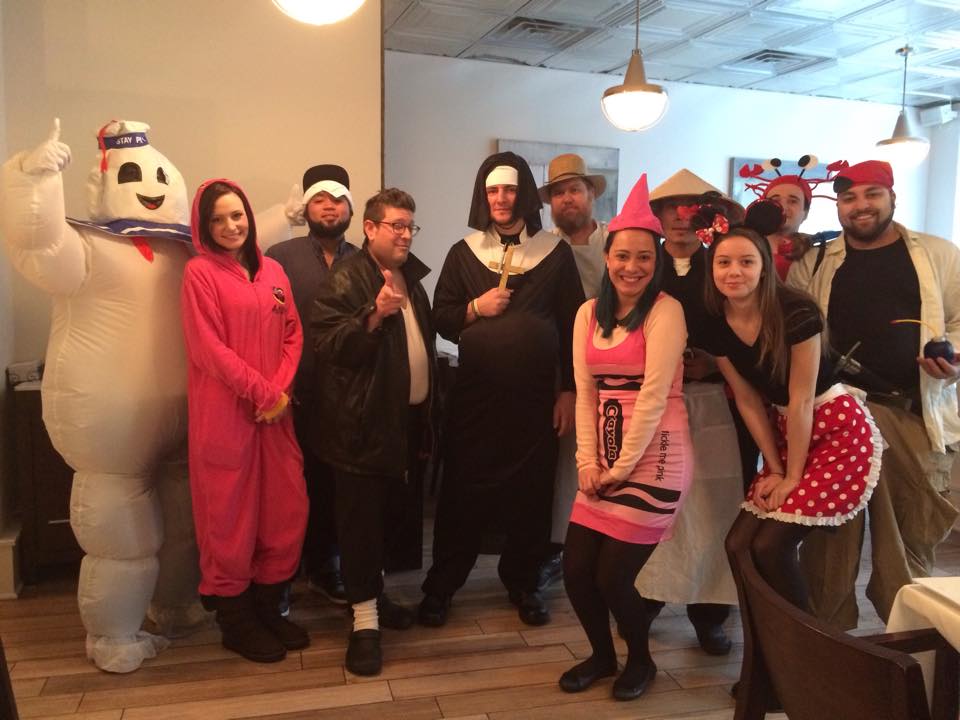
In our world the opposite holds true. Children cannot wait to don the garb of their parents, to fulfill the roles, the obligations of their elders. Children are excited about becoming the mommy, the tati, ima, and abba. At Purim time, the boys might wear a black hat, the girls, a sheitel. People place pictures of elder sages rather than sports stars, entertainers, etc., on their walls and mantles. These photographs rarely show a sage in their youth, a time considered the prime in our secular culture. It is not accurate to say by the G-d fearing, only the good die young.
How does this Mishnah have anything to do with Purim?
The idea of V’nahafochu, that by Purim the opposite occurred, we were victorious, Bnai Yisroel was victorious and what was decreed, destined, was reversed. This idea is why Purim is such an important day for us to the extent that even though it is d’rabanon (it doesn’t come to us d’oraysa) there is the idea that Purim will remain even in the time of Moshiach, the only Yom Tov to do so, that even as everything morphs into the existence Hashem intended us to experience, Purim will remain*.
The R’M’Ch’L’ in Mesilas Yesharim (there are certainly many other sources) says that the purpose of the Jew is for the avodas Hashem, to serve Hashem. This is our portion per the expression of His Kingship in our world. By accepting this duty, we recognize the order, seder, in creation, that Hashem made the world and it is not random that a person should think, well, why should I do the avodas Hashem if I can do anything else? Instead, we are goaded to recognize that it isn’t a choice to make, but in effect, the opposite is true, that the world was created solely for the avodas Hashem. It is not that the world was created and because we have free will one of those choices can be to perform the avodas Hashem, but by doing the avodas of Hashem is what we are created for. We realize with our being in this physical guf, that our free will makes it an option, that free will to choose what we want.
Regarding this dynamic of opposites, we see this in many things. In the Torah we see that in Moshe Rabeinu. What made Moshe Rabbeinu great? In the world that we live in greatness is size, greatness is wealth, greatness is perceptible achievements, achievements that people can comprehend and rally around. What made Moshe Rabbeinu great? Moshe Rabeinu was great because of his humility and humility is virtually invisible. The Rambam says that navuah, prophecy, is the coupling of intellectual capacity (Moshe Rabeinu achieved his potential completely in terms of what he was capable of doing with his intellect) with the cessation of ego. He remained completely humble before Ha’kadosh Baruch Hu, he did not limit what was unknown to him, so that he was able to speak to Ha’kadosh Baruch Hu, face to face.
We see that that is an idea of V’nahafochu because it is the opposite of what you would expect. You would expect that Moshe Rabeinu would be like the President, going around with a big entourage, a lot of pomp, grandeur etc.. He would be our version of Pharoah. If you want to speak to him you have to contribute a lot of money, be important, whatever it is. But rather, Moshe Rabeinu was humble and spent his entire time devoted to every soul of Israel, even at the expense of his family, until his father in law devises a new, better, strategy.
We see that Bnai Yisroel receives the Torah at Har Sinai and that Sinai represents on the one hand hatred, from the word sina, which seems odd because if anything you would think that it would be illustrious. Har Sinai also was a small mountain. It was not great. It was small. Also, the Gemara in * states, “wherever you find His greatness, there too, you find His humility. Hashem’s magnificence is ever present but He is all but invisible. His name only known through the work of His perfection.
All these things represent V’nahafochu, the opposite. Also, the Medrash says that all the nations of the world were offered the Torah from Ha’kadosh Baruch Hu. And why was it that Bnai Yisroel received it? Because we were the lowliest of the nations. This is something that doesn’t necessarily make sense to say that Bnai Yisroel received the Torah because we were the lowliest of all nations. There is nothing to suggest that we were trying for or would be able to recognize the greatness of the Torah because we ourselves weren’t great.
And yet that seems to be always there, always in the theme. Even the idea of the creation, of Braishis, that we recognize that Ha’kadosh Baruch Hu is infinite. That when we way Shma Yisroel…Hashem Echad, that the Echad, we are not necessarily thinking of the number one. We are saying that Hashem is infinite, that there is no divisible part of Hashem. And what is the creation? The creation is the opposite, just the creation itself is V’nahafochu. Hashem completely inverted whatever it is that Hashem is and created the opposite. And within that opposite condition the Jew is able to receive the Torah. Israel is able to follow the ratzon of Hashem and be a tikkun to the world, to repair the world. In the Gemara also (as I heard from R’Y’A’b”A during Pesach in Lakewood) it says Yosef ben Reb Yehoshua was ill and had a comatose-like experience where he seems to be dead. Then he comes back and his father asked him what he saw and he said Olam Hafuch, that he says an opposite world. Elyonim l’matah, that the giants in this world were nothing, that they were really small, and tachtonim l’ma’ala, the small invisible people in this world were giant. And his father responded to him by saying, that is not the Olam Hafuch, that is the Olam Barur, that is the actuality.
By Purim many years ago, my brother said to me that one of the ideas of V’nahafochu is the idea that Hashem made the decree that Bnai Yisroel was supposed to be destroyed so we recognize that that was as good as done. If Hashem makes a decree how can it not manifest itself? And yet, the opposite happened, that Bnai Yisroel is successful. So it seems that this is the incredible struggle that we have here in this world. We live in the Olam Hafuch. We live in a constant state of what is not supposed to be. We think to ourselves, this did not work, therefore, it is not G-d’s will. Did it involve kedusha? Mitzvos? Was it for the sake of Shemayim? If so, then we erred in letting go.
We are waiting for that redemptive event to find us but it will not seek us out without our first grasping for it, HaShem is nistar, Esther, hidden away in a kingdom of opposite rule and we must take it, overcome our apathy and fight for it rather than give it away to temporality.
Said The Holy One blessed be He: “My children open for Me one opening of repentance the size of a pin prick and I will open for you openings through which even wagons can enter.” [Shir Ha’shirim Rabba 5:3]
We have to recognize the Olam Barur and reveal it, despite the overwhelming presence of that which is upside down. The matter is too involved to introduce here, but, while Hashem knows everything and we receive that which is intended for us, we have, by definition of this world, free will and must affect the outcome now, we must initiate that pinprick and change our fated decree as our ancestors in Shushan because those matters are unknown to us and we are unable to say what is decreed, what is not decreed, in matters pertaining to kedusha outside of halachic definitions.
This is why Purim is so important. Purim recognizes that it happened, that it was this experience manifest, with Esther and Mordechai and the complete V’nahafochu, that this seemingly small idea that is not even mentioned d’oraysa becomes the important holiday in the olam barur in the time of Moshiach and this day of simple, earthly celebration is the day Yom Kippur is likened to, for as our holy teachers have stated, Yom Kippur, k’purim. Our shabbos of shabboses, Yom Kippur, is a day like Purim.
 Der vasser tregger